 |
|||||
 |
 |
 |
 |
 |
 |
|
||||||||||||
Aviator Biographies |
||
| Lt. Charles "Charlie" Rudolph D'Olive In 1965 a group of aviation enthusiasts recorded the stories of World War I aviators. Charles
Rudolph D’Olive was
the last man to be declared an ace in WWI, but not because of the date
of his last kill. He was declared an ace in the 1960s, when
they were closing out the service records from WWI. His citation
for his DSC on 9/13/18 spoke of three kills, but the official record
from that engagement ended up tallying two kills. He had had single
kills in two other combat situations, one before the 13th and
one after it. In the mid-60s, he petitioned the Air Force, and
his record was integrated, between the citation and the other records,
making him an ace. Because he was then in his later years, that
recognition was very gratifying to him, and he was proud to be a member
of the American Fighter Aces Association. Charlie, as he was called, joined the Signal Corps in Memphis, Tennessee on April 28, 1917 and was posted to the 93rd Aero Pursuit Squadron in Vaucouleurs, France on August 22, 1918. D’Olive shot down his first enemy aircraft, a Fokker D.VII, near Vieville-en-Haye on September 12, 1918. On October 28, 1918, he was reassigned to the 141st Pursuit Squadron as a flight commander.
Charles was born on July 10, 1896 in Suggsville, Alabama and died on July 20, 1974 in Waterloo, Iowa. Honorably discharged in February 1919, he was married in 1939 and had two children. In the recording, Charlie talks about his experiences in battle, of being shot down and how he searches out a farmer's wife in France to find out what happened to his friend who crashed. He also talks about the primitive aircraft that they flew and what they had to do to make them work. |
||
| |
||
|
|
||
| |
||
|
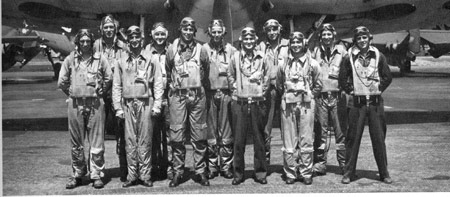
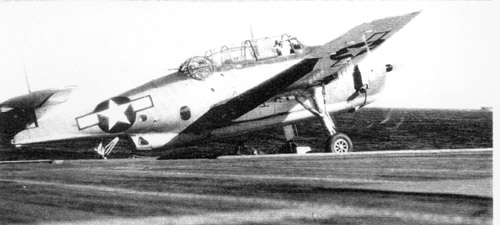
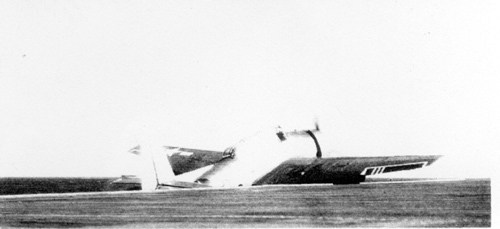
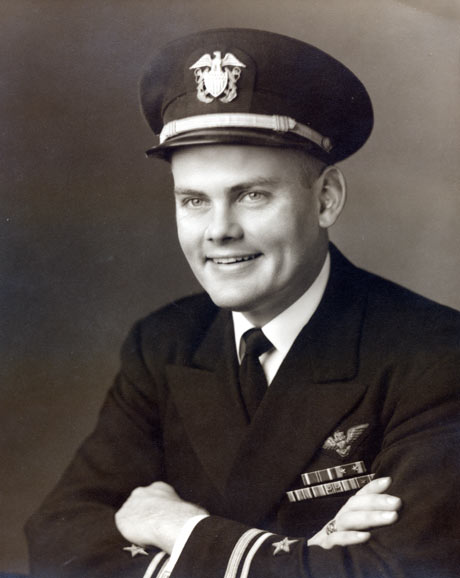
Robert H. Allison joined the Navy at the age of 20 and achieved the rank of Lieutenant Junior Grade. He took the test to become a Navy pilot on July 8, 1942 in Kansas City, Missouri, and entered the service on November 15, 1942. After preflight training in Iowa City, Iowa, he received his primary flight training at NAS Ottumwa, Iowa, in the Stearman biplane, basic training in the Vultee SNV-1 Valiant, and instrument and advanced training in the North American SNJ. On August 13, 1944, he was assigned to squadron VC-93 on the Escort Carrier Petrot Bay, where he flew the FM-2 Wildcat.
He married Lieutenant Margie Wada on July 1, 1947, after she received her discharge from the Army Nurse Corps. They have been married for over 55 years and have two children, a boy and a girl. After leaving the service, he attended USC and received a degree in Chemistry. After graduation, he then went to work for Great Lakes Carbon. If you would like to read more of Bob's war stories, visit his web page. |
||
| |
||
|
Maury has flown and qualified in both English and American aircraft. DH82 (Tiger Moth), Miles Magister, Miles Master, AT-6, P-51, B-17, PT-17, C-47, UC-64, and numerous civilian aircraft.
Most of Maury’s missions were comparatively uneventful. Two of them were not. Maury talks about the mission where his B-17 was hit and the struggle to return and how while flying a P-51, he was able to evade being shot down. |
||
|
I After one year as a flight instructor, Ed was assigned to the 8th Air Force's 2nd Air Division 785th Bomb Squadron of the 466th Bomb Group and went through B-24 flight crew training at Tonopah, Nevada. Ed's squadron was sent to Attlebridge, England from where they flew 16 bombing missions over Germany, Austria and France, just before VE day. Ed was awarded the Air Medal and the Victory Medal and was discharged in October, 1945. Under the G. I. Bill, Ed graduated from UC Berkeley with a BS degree in structural engineering. He is presently retired and lives with his wife in Marina Del Rey, California.
|
||
|
Gordon received the Air Medal with three oak leaf clusters and the Distinguished Service Cross with two oak leaf clusters. He also received the Asiatic Pacific theatre Campaign Ribbon with three battle stars. The citation cites " Extraordinary achievement in more than 500 hours of flight over terrain in China and Burma where enemy fire was probable and expected. Flying heavily loaded unarmed cargo aircraft through instrument weather over hazardous terrain, brought supplies, equipment, and reinforcements to the forward areas." Discharged on August 4th, 1945, at Ft. Dix in New Jersey, he returned to Cornell University where he studied civil engineering and obtained a BSCE under the G.I. bill. After graduating he went to work for Barber Greene Co. in Aurora, Illinois, married and had four children. Gordon talks about his experiences through basic training and crash landing due to bad weather. He tells about how his plane was the last out of a Chinese airfield right behind the advancing Japanese, landing on rice patties in Burma and dropping supplies to the British troops. |
||
|
Assigned to the carrier the USS Santee (CVE-29), Howard initially flew the SBD Dauntless dive bomber and later switched to the newer version the TBF, Avenger torpedo bomber, the TBM. He made three trips to North Africa escorting ship convoys and looking for German submarines in the North Atlantic. In January
of 1944 he returned to Groton Connecticut and then on to Ulithi On the 24-26 of October, the Cabot saw action in the Battle of Leyte Gulf. During all these missions the fleet was under constant attack. On November 25th 1944 the Cabot was hit by a Kamikaze, hitting a TBM, putting a hole in the deck destroying the catapult and radar rooms with the loss of life. Thirty five men were killed and 17 were wounded. At this time Howard was wounded receiving burns to the face and hands. Temporary repairs were made and the Cabot remained on station until its scheduled return to Ulithi Harbor for major repairs. The Cabot also weathered a typhoon in December that sank three destroyers and damaged other ships.
On April 13, 1945 the Cabot returned to San Francisco. After the war Howard went to Flight Instructors School, Married Lois Waage of Walnut Illinois. After 30 years of service Howard retied on May 1st, 1972. In the audio section of the webpage, Howard talks about his service in the Navy and the attack on the Yamamoto. |
||
|
He attended the Naval aviation progran, V-5, for Civil Pilot Training at St Mary's College, Winona, Minnesota, flying J-3 Cubs. In the spring of 1943 he was sent to the University Of Iowa, in Iowa Cit, IA. From there, in July of 1943, he went to primary flight training at Ottumwa, Iowa. He flew the Stearman, "Yellow Peril" for about seventy five hours. Ottumwa was one of about twenty Primary bases called "E" bases, the "E" in this case stood for Elimination. It's where they washed out pilots that they didn't think could complete the program. In Sept. '43 he went to Ellyson Field in Pensacola, FL, where he received advanced training in the low winged Vultee "Vibrator"BT-13. He also flew the SNJ (AT-6) and had instrument training in the "Link" Trainer. Returning to Pensacola, Main Side, in November of 43, for training in the PBY. Here is where the split was made,sending some pilots to fighter bases and the multi engine pilots to either Bronson Field or to remain at Main Side for the PBY. Only Bronson and Main Side had seaplane facilities. Main Side had a preponderance of foreign student pilots. At the time Dan went, there were British, French and some South American students. There were only about twenty Americans. Again this was intense training, lots of flying and lots of ground school. January 15th, 1944, Graduation day!! In dress uniform, he shook the Admiral's hand and received those "Navy Wings Of Gold." It was a wonderful day but sad as well, as he remembered friends who lost their lives in training accidents. When he said that the training was intense, He meant every word of it, since during that period, the Navy was losing more pilots in combat than they were graduating. After receiving
fight training in Pensacola, Florida he was shipped out to the Pacific.
He received two Distinguished Flying Crosses and three Air Medals. Dan married his wife, Marlowe, in 1944, 12 days before leaving for the Pacific. After the war he became a pilot for Minneapolus Honeywell, from 1946 through 1948. After leaving Honeywell, he flew for Braniff Airlines until 1956. Between 1965 and 1987 he flew for Douglas Aircraft as a test pilot. Finally, flying for Scenic Airlines until 1991. Dan and Marlowe have two children. In the audio section of the web page, Dan talks about an extraordinary story of how he and his crew and providence dealt with a particular problem that arose during what he thought would be a “milk run” flight: On June 27, 1945, they were scheduled to fly to Saipan for an engine change to their PBM. They welcomed the chance to get some R&R away from the constant harassment of Japanese Kamikaze attacks and the noise of General Quarters alerts. Take off was routine from Retto, Okinawa as they started their 1211 mile trip to Saipan.
|
||
|
In the audio
recording, Mel talks about his experiences as an instructor and some of
the problems encountered flying the modified B-17s and B-24s. |
||
2nd Lieutenant
Edwin Hatter
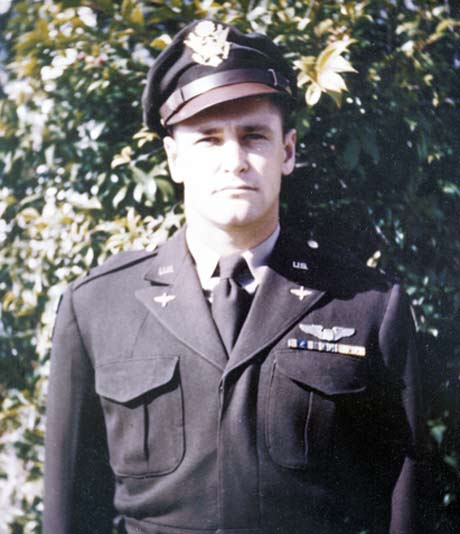
Ed’s goal was to become a Navy Carrier pilot, and at the age of 21 he tried to enlist in the Navy. Unfortunately, the Navy was only accepting 18 years olds. So in February 1943 he enlisted in the Army Air Force in his home town of Torrance California. Prior to enlisting he was working for Northrop Aircraft as a draftsman. He was told that it would take six months before he would be called, but in three weeks he was off to Kerns Utah for testing and classification as a pilot. From there, in January of 1944, he went San Antonio for pre flight instructions and then on to Colman Texas for primary flight training in a Fairchild PT-19, Cornell. Basic flight training was at Brady Field Texas in a Vultee BT-13 Valiant. In June of 1944 he was sent to Waco Texas for Advanced multi engine training in a Cessna AT-17, Bobcat. Graduating from flight school in August of 1944 he was shipped to Europe as a C-46 pilot. Transferred to the China Burma Theatre, he flew 85 flights around the clock, sometimes twice a day, over the hump bringing supplies into China. After the Japanese surrender, Ed continued to fly men and material out of the war zone until November of 1945, when he returned to the states. He remained in the service until December 1955.
For his service in the Army Air Force he received an air metal plus cluster, and for the European Tour of Operations, two battle stars and an Asiatic Pacific ribbon, two battle stars. |
||
|
Wes followed his brother into the Army Air Corps. Prior to entering service, he obtained his pilots license in 1940 through the Civilian Pilots Traning (CPT) program. At the age of 21, he enlisted in Los Angeles on November 7th 1941. After flight training, where he flew the PT-19A, BT-13, AT-6 and the B-24, he was assigned to Ellington Field, Houston Texas as a B-24 instructor. Not being content with being an instructor, he requested and was transferred to the Eight Air Force in England. Capt.
Stone was assigned to the Second Division 466 Bomb Group 786 Squadron.
He flew 32 missions which included Berlin. He received the Air Metal
DFC. After returning to the states he was assigned to Alamagordo
New Mexico where he flew B-24s as targets for students in pursit school.
From there, in 1945, he went to Lowrey Field, Flight Engineer School
in Denver, again flying B-24s equiped to train B-29 flight engineers.
He remained in the Air Force until January 6th 1946 where he was discharged
in San Antonio Texas. After discharge he flew, as a Captain, for TWA, Western Airlines, Arrow and Flying Tigers until he retired in 1980. Wes married and had three children, a boy and two girls.
|
||
|
He enlisted in the Army Air
Corps in California on December 11, 1941 and was told that it would
take several months before he would be called. On February 11th
1942 he was called up and sent to March Field, California and then
on to Ontario, California for primary and basic and then on to Stockton
for advanced training in AT-6's. Dave received the Distinguished Flying Cross, Purple Heart, Air Medal, American Theatre Ribbon with one star, European Theatre Ribbon with four stars, American Defense Ribbon, and the World War II Victory Medal.
|
 Lt.
D’Olive received the Distinguished Service Cross (DSC) for extraordinary
heroism in action near St. Benoit, France, on September 13, 1918. Lt.
D'Olive, in conjunction with another American pilot, engaged and fought
five enemy planes. Outnumbered and fighting against tremendous odds,
Lt. D'Olive shot down three enemy planes and out-fought the entire enemy
formation.
Lt.
D’Olive received the Distinguished Service Cross (DSC) for extraordinary
heroism in action near St. Benoit, France, on September 13, 1918. Lt.
D'Olive, in conjunction with another American pilot, engaged and fought
five enemy planes. Outnumbered and fighting against tremendous odds,
Lt. D'Olive shot down three enemy planes and out-fought the entire enemy
formation.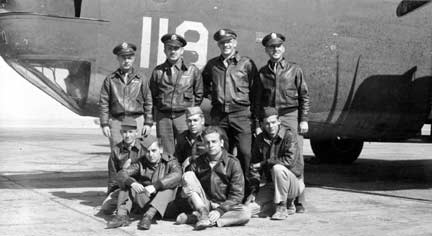
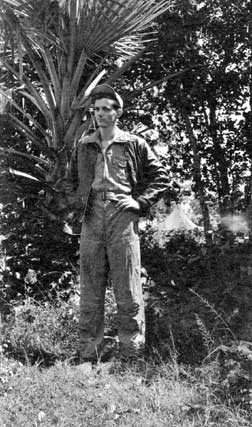
 Jack
received the Air Medal for 300 mission hours before being sent home. He
was discharged from the service on November 2, 1945 and returned to work
at Northrop Aircraft. Jack was married for 49 years and has two children.
Jack
received the Air Medal for 300 mission hours before being sent home. He
was discharged from the service on November 2, 1945 and returned to work
at Northrop Aircraft. Jack was married for 49 years and has two children.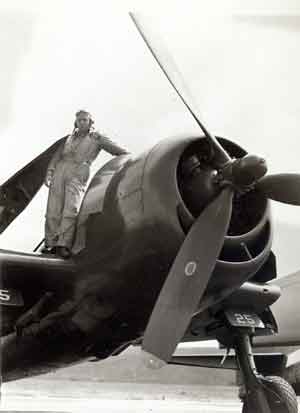
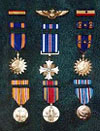 Lt.
(j.g.) Allison received the Air Medal and four stars, the DFC (Distinguished
Flying Cross), an Asiatic Pacific Theater Medal, an American Campaign
Medal and a Presidential Unit Citation Ribbon.
Lt.
(j.g.) Allison received the Air Medal and four stars, the DFC (Distinguished
Flying Cross), an Asiatic Pacific Theater Medal, an American Campaign
Medal and a Presidential Unit Citation Ribbon.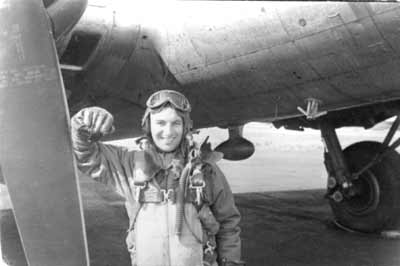
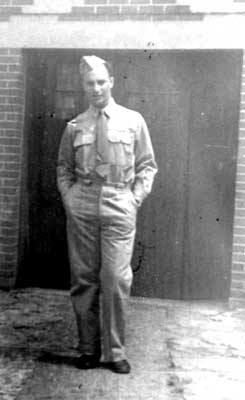
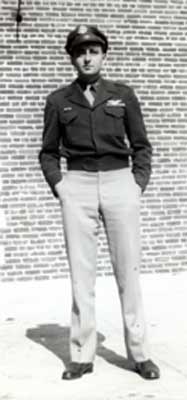
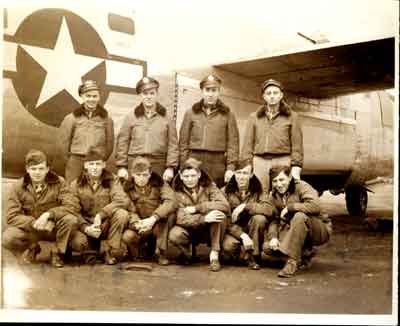
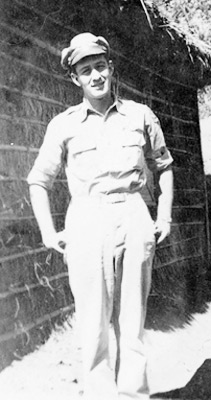
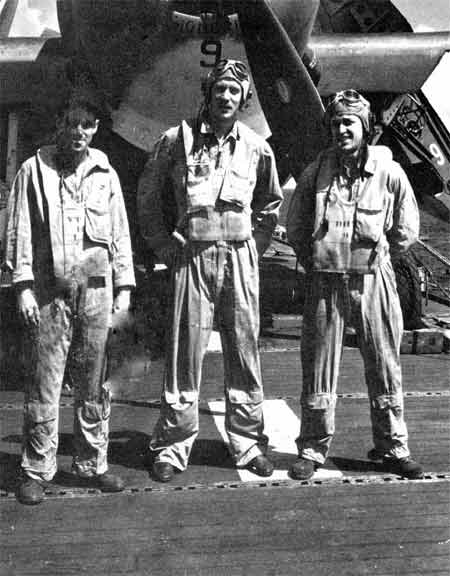
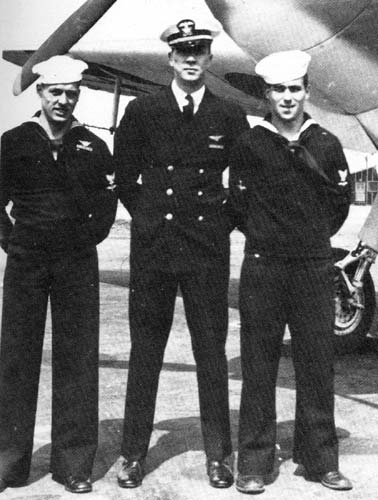
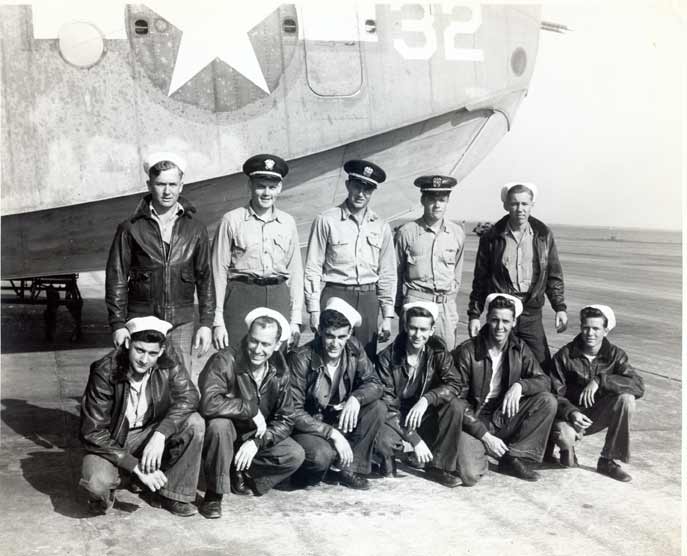
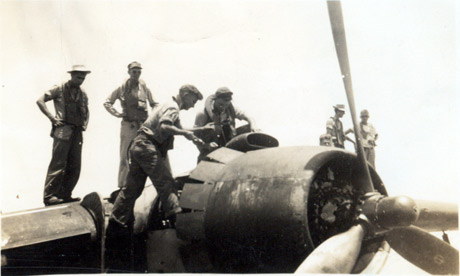
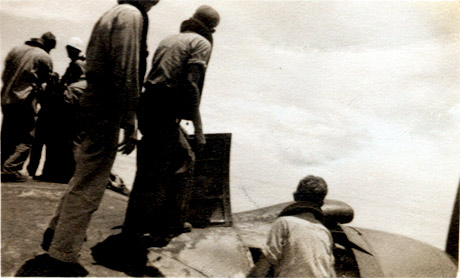
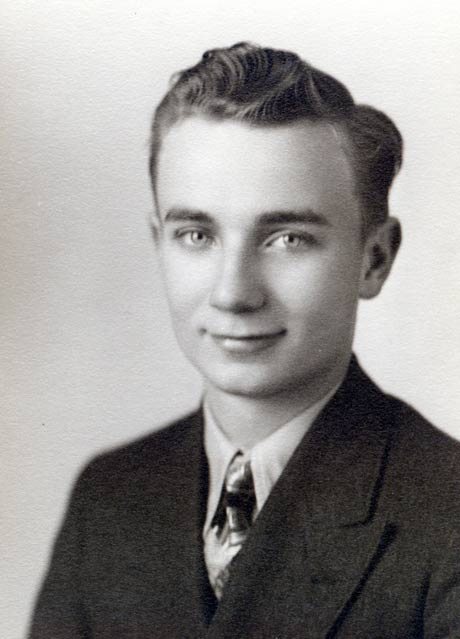
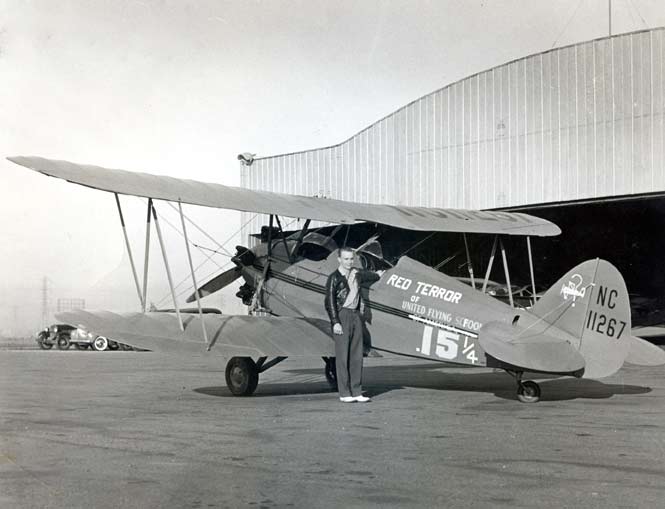
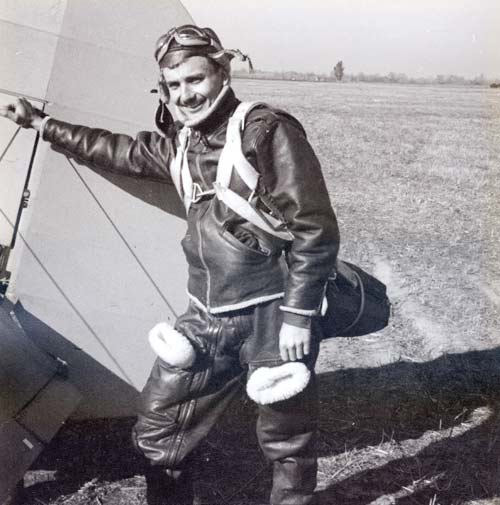
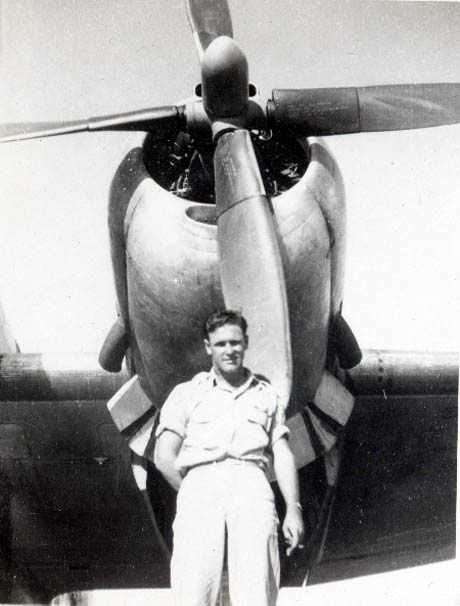

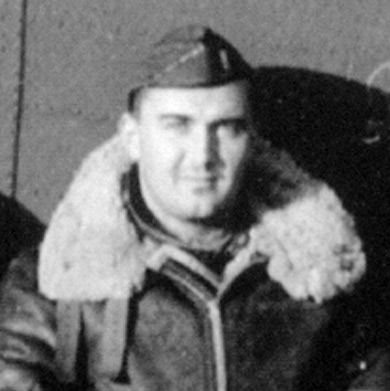
 Dave
wanted to be a flyer at an early age. At nine years of age, he
met Lindberg at a meeting where he was speaking; where he told
Lindberg that he wanted to be an aviator.
Dave
wanted to be a flyer at an early age. At nine years of age, he
met Lindberg at a meeting where he was speaking; where he told
Lindberg that he wanted to be an aviator.  Shipped
to Palestine with the 98 bomb group, he flew 29 missions over Italy,
Greece and Sicily until the 30th when he was shot down by an ME 109. Dave
piloted a B-24 aircraft on missions over enemy oil fields and submarine
dens. He participated in softening up operations on enemy
positions preparatory to the invasion of Sicily and Tunisia. He also
took part in the Egypt and Libya campaigns. When he was shot down he
was captured by the Italians and held prisoner until Italy gave up. His
camp was then taken over by the Germans who moved the prisoners to Germany
where he remained until the end of the war when Patton's Army liberated
the camp.
Shipped
to Palestine with the 98 bomb group, he flew 29 missions over Italy,
Greece and Sicily until the 30th when he was shot down by an ME 109. Dave
piloted a B-24 aircraft on missions over enemy oil fields and submarine
dens. He participated in softening up operations on enemy
positions preparatory to the invasion of Sicily and Tunisia. He also
took part in the Egypt and Libya campaigns. When he was shot down he
was captured by the Italians and held prisoner until Italy gave up. His
camp was then taken over by the Germans who moved the prisoners to Germany
where he remained until the end of the war when Patton's Army liberated
the camp.  Back
in the states he received extensive corrective surgery. He was
honorably discharged from the services in September of 1946 and went
back to school at the University of Southern California and was involved
with the Civil Air Patrol. Dave
worked for the Los Angeles County Air Pollution Control District (APCD). Dave
retired from the APCD on July 1, 1982.
Back
in the states he received extensive corrective surgery. He was
honorably discharged from the services in September of 1946 and went
back to school at the University of Southern California and was involved
with the Civil Air Patrol. Dave
worked for the Los Angeles County Air Pollution Control District (APCD). Dave
retired from the APCD on July 1, 1982.